Published By: Women and Infants on June 16, 2025
Updated Date: August 2026
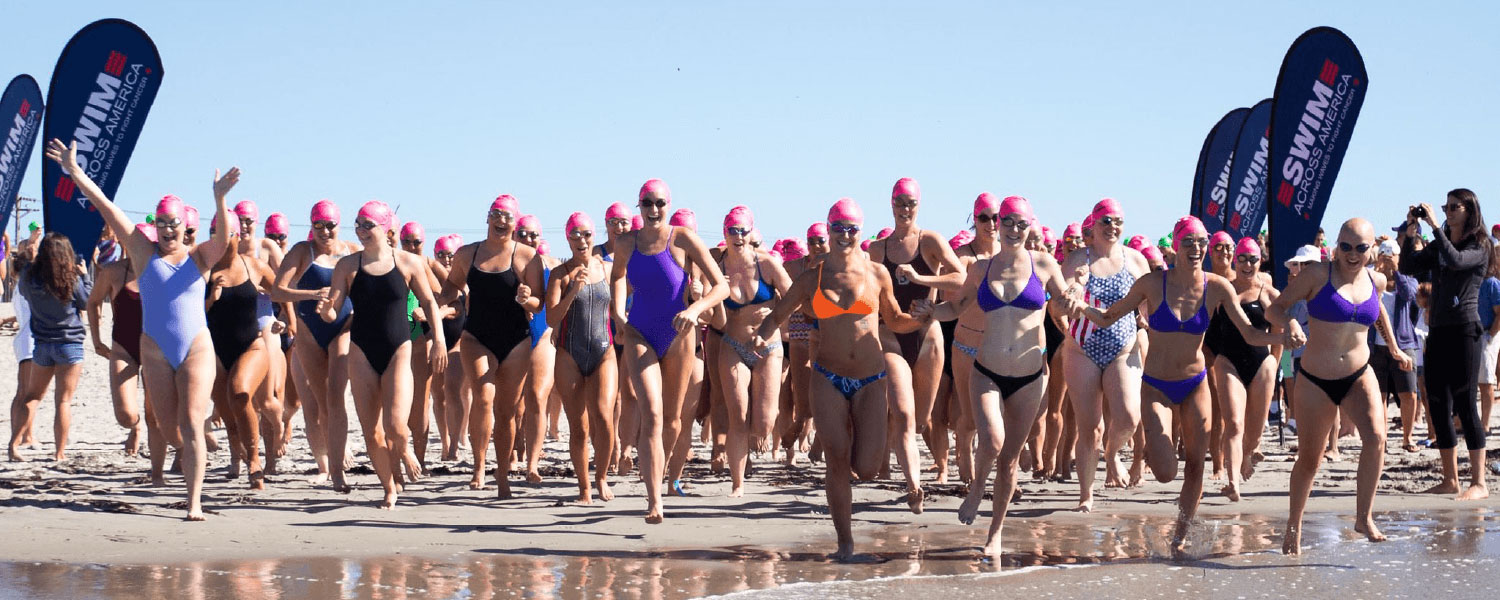
The nonprofit Swim Across America (SAA) runs charity swim events nationwide that, since 1987, have raised over $150 million for cancer research and patient programs. By supporting studies that have not yet received National Institutes of Health or other government grants, this funding underscores the importance of philanthropy to potentially lifesaving or life-altering medical research.
Since 2010, SAA’s open water charity swim in Rhode Island has raised over $3 million for cancer research at Women & Infants Hospital. These funds helped researchers in our Program in Women’s Oncology Center for Biomarkers & Emerging Technology (CBET) discover a biomarker for ovarian cancer and introduce to clinical practice a test that helps doctors assess, before surgery, whether an ovarian mass is likely to be cancerous.
This test is now used worldwide and is a game changer for women with ovarian cancer, which is notoriously difficult to diagnose at an early stage when it is most treatable. And this research has expanded to identify other biomarkers that help predict patient prognosis and treatment response.
Within the last five years alone, SAA funding has enabled researchers at Women & Infants to secure over $1 million in additional grant funding for their work fighting breast and gynecologic cancers.
The 2026 SAA Rhode Island Open Water Swim is taking place on Saturday, September 12, at Roger Wheeler State Beach in scenic Narragansett. This annual event attracts over 1,000 swimmers and volunteers of all ages, including Olympians and dozens of fundraising teams.
For information about sponsoring, donating, or registering to swim or volunteer for the event, visit https://www.swimacrossamerica.org/rhodeisland. To see photos and videos from previous years' events, view the SAA-RI Flickr album.
The Need for Cancer Research
More than 300,000 women will receive breast or ovarian cancer diagnoses in the United States this year. This staggering statistic keeps all of us at Women & Infants motivated to achieve better patient outcomes through state-of-the-art treatment and world-class research performed by some of the most talented clinicians and investigators in the world.
Although current treatments help cure some breast or ovarian cancer patients, many ovarian cancers and some forms of breast cancer are more aggressive. Treatments for all types of cancer can have near-term and long-term negative effects, including undesirable hormonal changes and diminished fertility.
Researchers in the Program in Women’s Oncology at Women & Infants strive to overcome these effects and improve female cancer patients’ lives by developing better treatment approaches, identifying new prognostic biomarkers, and improving our understanding of how cancer treatments affect long-term fertility and ovarian function. This work is driven by their dedication to the women we serve.
Current SAA-Funded Research Studies
Assistant Professor Nicole James, Ph.D., conducts research studies focusing on the complex interactions that occur in ovarian tumors and a certain kind of breast cancer that lacks hormone receptors, called “triple negative” breast cancer. All tumors have an immune component resulting from the body’s response to the tumor as a “foreign entity.” The James lab is investigating how immune components within the tumor respond to different treatments such as chemotherapy or immunotherapy. The goal is to optimize current treatments or identify new treatment approaches that capitalize on this immune response.
A prior SAA-supported study published by the James lab found that levels of specific immune-based factors are consistently increased in ovarian cancer patient tumors following chemotherapy administered before surgery. A subsequent SAA-funded study found that enhanced levels of one of these factors help tumor cells multiply faster while weakening the immune responses the body needs to fight the cancer. The James lab’s ongoing follow-up research includes targeting this factor in laboratory animals with stand-alone immunotherapeutic agents and in combination with standard-of-care chemotherapy, which has allowed the lab to acquire additional funding for preclinical development of this novel immunotherapy.
“Ovarian cancer patients inevitably become resistant to chemotherapy and are largely unresponsive to current immunotherapies, highlighting the urgent need for new therapy options,” said James. “Our latest findings show that, by identifying immune factors intrinsic and unique to ovarian tumors, we can develop new immunotherapeutic approaches that may improve treatment response and patient outcomes.”
Assistant Professor Kathryn Grive, Ph.D., is similarly interested in helping women afflicted with cancer, but from the perspective of improving quality of life during and after treatment. New and improved cancer therapeutics are enabling more women to survive their primary disease. But the after-effects of chemotherapy, such as premature menopause, affect these women’s ability to bear children and cause other systemic health consequences typically associated with aging, including increased risk of heart attack and stroke, accelerated cognitive decline, and overall shorter lifespan.
The Grive lab is investigating the mechanisms of chemotherapy-induced ovarian damage and researching new dosing regimens that may be safe for reproductive and hormonal function. Recently, they have also begun investigating emerging targeted therapies, such as CDK4/6 inhibitors, for their effects on fertility and long-term ovarian health and function.
The lab is also studying the mechanisms of healthy ovary development to help leverage those mechanisms for ovarian protection. Their recently published, SAA-supported study has identified one such protein that when inhibited may promote egg survival and preserve ovarian health.
“Swim Across America funding helped us generate the foundational data that is informing our current studies,” said Dr. Grive. “We’re now investigating the effects of chemotherapeutics on ovarian function and long-term health, the transgenerational effects on a cancer survivor’s daughters, and the development of reproductive diagnostics to measure ovarian health after chemotherapy.”
“Swim Across America funding also supports the training of our next generation of physician-scientists,” added Dr. James. “Providing medical fellows in the Department of Obstetrics and Gynecology the opportunity to conduct laboratory research allows doctors to participate in studies that may one day inform how they treat patients in the clinic.”
Women & Infants Hospital is one of the nation’s largest, most prestigious research facilities in high-risk and normal obstetrics, gynecology, and newborn pediatrics. Learn more about all the research studies happening at Women & Infants.


 Swim Across America Event Supports Cancer Research at Women & Infants Hospital"
class="bg-img"
fetchpriority="high"
loading="eager"
decoding="async">
Swim Across America Event Supports Cancer Research at Women & Infants Hospital"
class="bg-img"
fetchpriority="high"
loading="eager"
decoding="async">